Dental implants replace missing tooth roots with a small titanium post that holds a crown, bridge, or denture. Knowing the four types of dental implants matters if you’re thinking about tooth replacement near Dawson County, Montana, because each type fits different bone levels, budgets, and timelines. Choosing the right implant can mean a more stable bite, better comfort, and fewer future procedures.
What Are Dental Implants?
Dental implants are anchored in the jaw to support visible replacement teeth. The basic parts are the implant post (the part in the bone), the abutment (which connects the post to the restoration), and the restoration itself (a crown, bridge, or denture).
Compared with traditional bridges, implants don’t require altering nearby healthy teeth. Compared with removable dentures, implants offer more stability and chewing function.
The Four Types Of Dental Implants In Dawson County, Montana
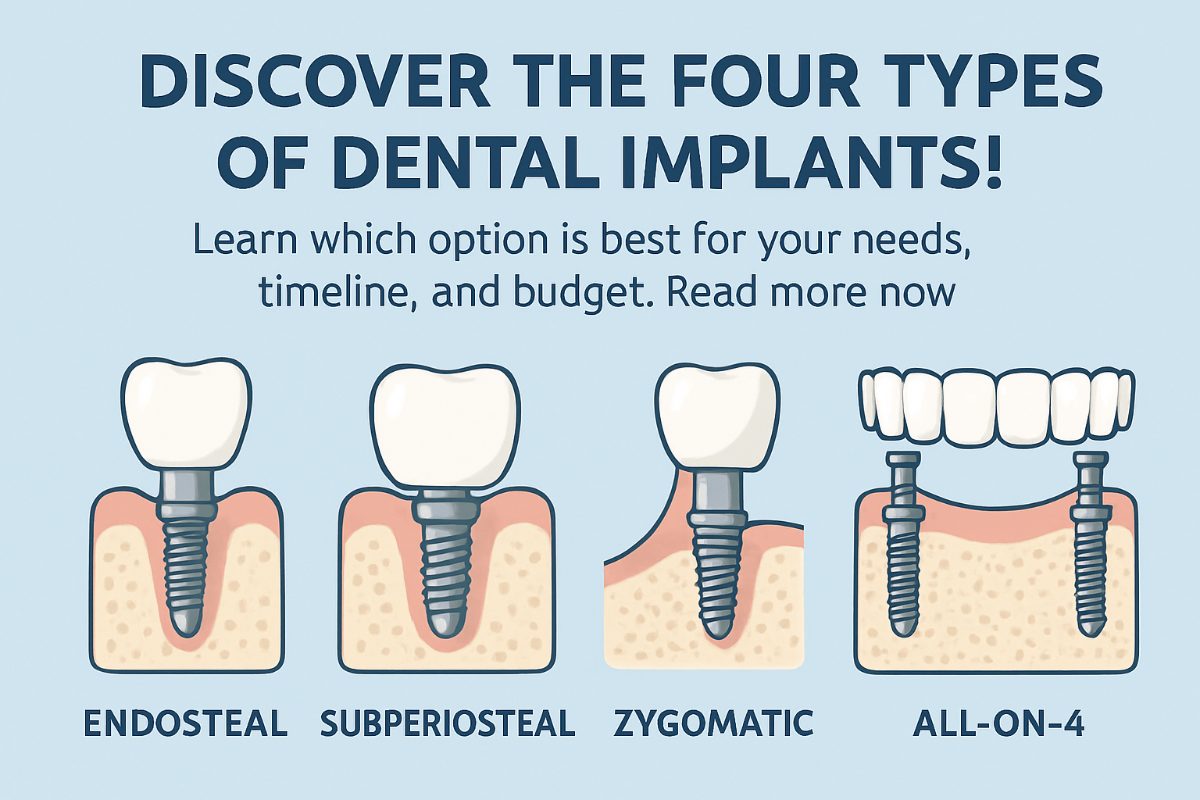
Below are the four main implant approaches, along with when a patient might consider each near Dawson County, Montana.
Endosteal Implants (Most Common)
Endosteal implants are placed directly into the jawbone and are the standard for single-tooth replacements, implant crowns, and implant-supported bridges. Pros: widely used, predictable results, and good for most patients with adequate bone. Cons: may need bone grafting if bone height is low. The typical healing timeline is several months for osseointegration before the final crown is attached.
Subperiosteal Implants
Subperiosteal implants sit on top of the jawbone, but below the gum line. They’re an option for patients with low jawbone height who want to avoid extensive bone grafting.
Pros: less invasive for those with poor bone; can support dentures.
Cons: less common today, may have lower long-term success than endosteal implants.
Zygomatic Implants
Zygomatic implants anchor into the cheek (zygoma) bone and are used for severe upper-jaw bone loss when standard implants are not possible. They’re typically recommended by specialists and may allow immediate function without grafting. Key considerations: more complex surgery, longer recovery, and best done by experienced teams.
All-on-4® / Full-Arch Implant Solutions
All-on-4® is a full-arch approach that uses four strategically placed implants to support a fixed denture. It differs from placing many single implants across an arch. Benefits include faster restoration, fewer implants, and often no grafting. It’s ideal for patients who have lost most or all of their teeth and want a stable, fixed solution.
How To Choose Between The Four Types Of Dental Implants
Bone health and anatomy
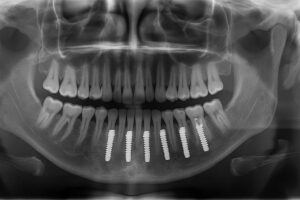
Bone quality and shape dictate candidacy. CBCT scans and intraoral scans show bone volume and nerve locations. These images help determine whether endosteal implants, zygomatic implants, or alternatives are best.
Number of missing teeth and functional goals
A single missing tooth usually fits a single endosteal implant. Multiple missing teeth or a whole-arch replacement may favor implant-supported bridges or All-on-4® solutions.
Medical history, budget, and timeline
Health conditions, smoking, medications, and healing ability affect choice. Costs and treatment time vary: single implants can take months; full-arch plans can often shorten total time but may cost more up front.
What To Expect During Implant Treatment Near Dawson County, Montana
Expect an initial consult with medical/dental history, CBCT imaging, and digital scans for planning. Surgery may use local or IV sedation. After placement, healing (osseointegration) takes weeks to months before the final restoration. Restorative appointments follow, and aftercare includes good oral hygiene and follow-up visits.
About Sandcreek Dental — How We Deliver Modern Implant Care
Sandcreek Dental’s Glendive location uses CBCT, iTero/Trios scanners, CEREC same-day crowns, and in-house 3D printing for precise, digital implant planning and restorations. The team offers sedation options and a comfort-focused experience for patients seeking implant care.
Questions To Ask Your Dentist About The Four Types Of Dental Implants
Which type do you recommend and why? What imaging and technology will you use (CBCT, intraoral scan)? What is the timeline, total cost, and aftercare? Are financing or sedation options available?
Next Steps For Patients Considering Dental Implants Near Dawson County, Montana
Schedule a consult and bring your medical and dental history. Request a CBCT and digital scan to determine which of the four types of dental implants in Dawson County, Montana, best suits your case. A clear plan will outline options, costs, and expected timelines.