Your smile is one of the first things people notice about you, and maintaining its health is crucial for overall well-being. Two primary components in dental care that often lead to patient questions are dental cleaning and deep cleaning. Understanding the difference between these procedures can help you make informed decisions about your oral health. Let’s explore what each entails and when you might need one over the other.
What is a Dental Cleaning?
A standard dental cleaning, also known as prophylaxis, is a preventative procedure aimed at removing plaque, tartar, and stains from the teeth. This procedure is generally recommended to maintain oral hygiene and prevent chronic problems such as gum disease. During a routine dental cleaning, a hygienist will use a scaler to remove tartar and plaque deposits on the surfaces of your teeth and floss between your teeth to remove leftover debris. The final step involves polishing your teeth to remove stains. Most patients benefit from regular cleanings every six months.
What is a Deep Cleaning?
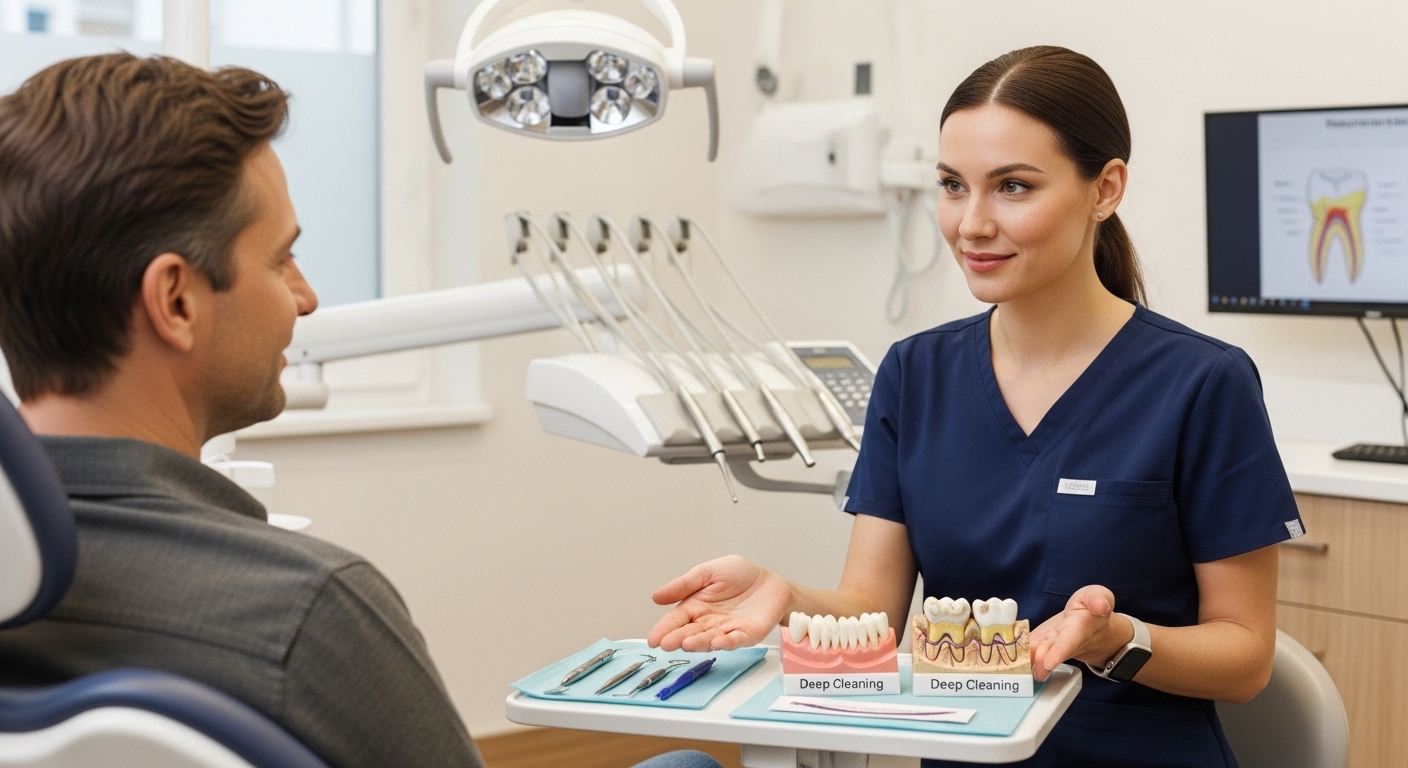
Deep cleaning, or scaling and root planing, is a more intensive procedure than a regular cleaning, used to treat gum diseases like gingivitis and periodontitis. This process involves cleaning between the gums and teeth, down to the roots. Patients often receive an anesthetic to numb the treated area for comfort. It is typically recommended when periodontal pockets form, which is when the area between the gums and teeth is deeper than normal. This procedure may be performed in multiple visits, depending on the severity of the condition.
Key Differences Between Dental Cleaning and Deep Cleaning
While both types of cleanings aim to improve your oral health, they do so in different ways, targeting different oral issues. Dental cleaning focuses on surface areas and preventive care, while deep cleaning addresses root-level problems associated with periodontal disease. A dental cleaning is generally quicker and involves mild discomfort, while a deep cleaning might require multiple visits and involves a more thorough, sometimes uncomfortable process.
Signs You Might Need a Deep Cleaning
Early signs that you might need a deep cleaning include swollen or bleeding gums, persistent bad breath, loose teeth, or receding gum lines. These symptoms suggest the presence of gingivitis or periodontitis, which need more than just regular cleaning to treat. If you experience any of these signs, it’s essential to seek a dental evaluation as soon as possible.
Advanced Technology in Dental Cleanings
At Sand Creek Dental, we leverage advanced technology to maximize the effectiveness of both dental and deep cleanings. Ultrasonic scalers, for instance, use vibrations to break up tartar without damaging your teeth, while lasers can help reduce the size of periodontal pockets. These technologies not only make procedures more comfortable for patients but also improve outcomes and shorten recovery times.
Benefits of Regular Dental Cleanings
Regular dental cleanings offer numerous benefits, including preventing cavities, gum disease, and tooth loss. They also contribute to fresher breath and visualize the early stages of potential issues. Aesthetically, cleanings help maintain the natural shine and brightness of your smile. Preventive care is less invasive and less costly than treatments for advanced dental conditions.
Comprehensive Care at Sand Creek Dental
In addition to routine cleanings and specialized deep cleanings, Sand Creek Dental offers comprehensive dental care, including full-mouth rehabilitation. Our services extend to All-on-4 implants, CEREC same-day crowns, smile makeovers, snap-in dentures, and sedation dentistry, ensuring personalized care for every patient.
Frequently Asked Questions
-
What is the difference between dental cleaning and deep cleaning? Regular cleaning is preventive and surface-level, while deep cleaning addresses issues under the gum line, such as gum disease.
-
How often should I get a dental cleaning? Routine dental cleanings are usually recommended every six months.
-
Does deep cleaning hurt? An anesthetic is usually applied, but some discomfort may occur after the procedure.
-
Can deep cleaning prevent tooth loss? Yes, by treating periodontal disease, deep cleaning can help prevent tooth loss.
-
What is the cost difference between the two procedures? Deep cleaning is generally more costly due to its intensive nature and the need for multiple appointments.
Understanding the nuances between dental cleaning and deep cleaning can be pivotal in maintaining excellent oral health. If you are due for a cleaning or think you might need a deep cleaning, now is the time to act. At Sand Creek Dental in Glendive, MT, we provide the hospitality and advanced dental care you deserve. Contact us today to schedule your consultation or cleaning and take the first step toward a healthier, brighter smile.