If you’re planning full mouth reconstruction in Glendive, MT, this guide explains what to do before treatment and what to expect after. You’ll get clear steps for preparation, practical recovery timelines, and tips to keep your new smile working well for years.
How to Prepare for Full Mouth Reconstruction in Glendive, MT
This section helps patients know what to do before treatment so appointments go smoothly and outcomes match expectations.
Comprehensive exam & digital planning
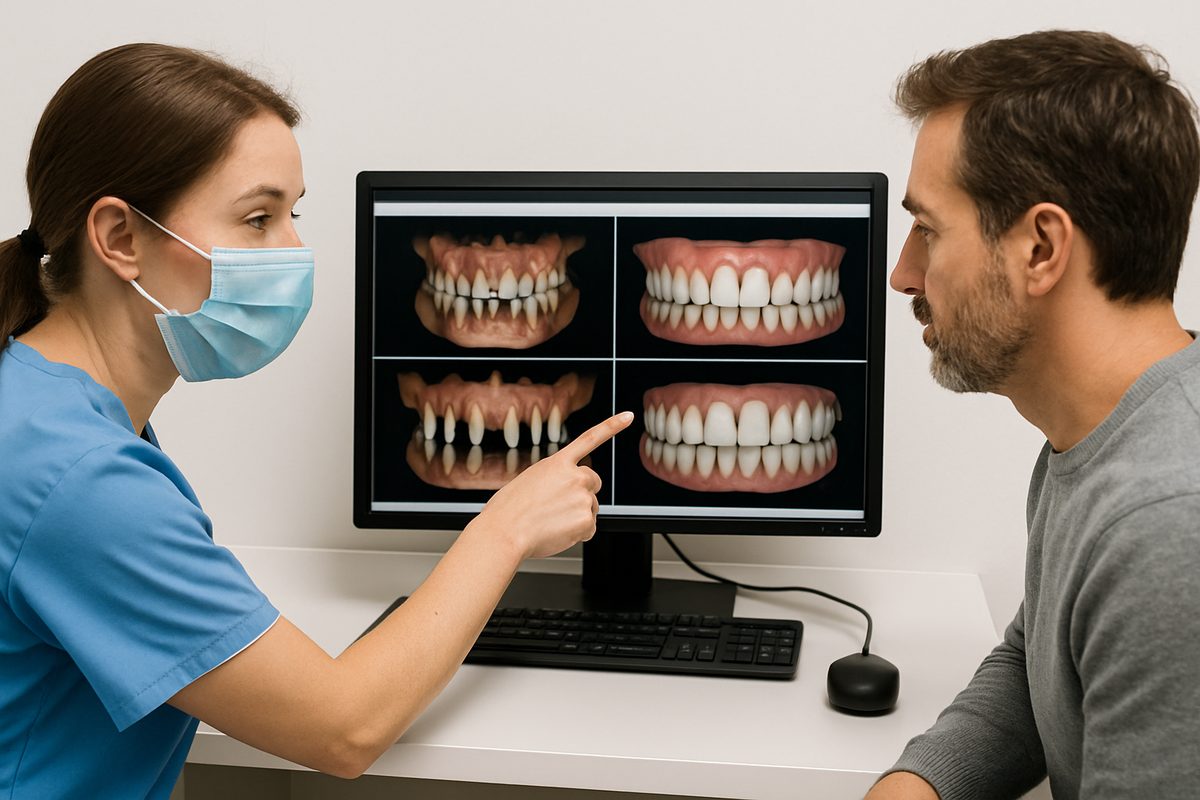
Your team will start with a full exam and digital records to design your treatment precisely. Expect a CBCT scan for 3D bone and nerve mapping, intraoral scans with systems like iTero or Trios to capture exact tooth and gum shapes, and digital smile design mockups to preview results. These tools let your dentist plan implants, crowns, or bridges with greater accuracy and set realistic expectations for patients in Glendive, MT.
Medical history, medications, and lab needs
Bring a current list of medicines and any medical history that affects surgery—heart conditions, bleeding disorders, or diabetes. If you take blood thinners or have recent hospital care, your team may coordinate with your physician. Labs or medical clearances are required only when there’s a related health concern; your dentist will tell you if they are needed.
Sedation, comfort options, and logistics
Discuss sedation options ahead of time: local anesthesia, oral sedation, or IV sedation may be available depending on the procedure and your comfort. Arrange a ride home and plan time off work for the procedure and first-day recovery. Follow pre-appointment instructions about fasting or medication adjustments, and wear comfortable clothing. Consider someone to stay with you for the first 24 hours if heavy sedation is used.
Financial prep & insurance questions
Ask for a written estimate and a treatment plan that breaks out costs. Typical options include payment plans, third-party medical financing, and using dental insurance where applicable. Bring your insurance card, photo ID, and any referral or authorization forms to the consultation to speed the process.
Recovery Timeline and Long-Term Care After Reconstruction in Glendive, MT
Major restorative care has predictable stages of healing. Follow-up visits and good home care are key to lasting results.
Immediate recovery (first 1–2 weeks)
Expect soreness, swelling, and mild bleeding for the first few days. Pain is usually controlled with prescribed or over-the-counter medications. Use ice packs on the face for the first 48 hours, eat soft foods (soups, mashed potatoes, yogurt), and avoid strenuous activity. Call your dentist right away for heavy bleeding, uncontrolled pain, high fever, or swelling that worsens after 72 hours.
Intermediate healing (2–12 weeks)
For implants, this period is when osseointegration (bone fusing to the implant) happens. For crowns and bridges, you may notice settling or minor sensitivity as tissues adapt. Gradually return to a normal diet as comfort allows. Temporary restorations are commonly replaced with final crowns or prostheses once healing and measurements confirm stable fit—often between 8 and 12 weeks, depending on your case.
Long-term maintenance
Protect your reconstruction with daily brushing, flossing, and interdental cleaning. Regular professional cleanings help stop gum disease that can threaten restorations. If you grind teeth, a custom night guard can protect crowns and implants. Avoid chewing very hard items and limit tobacco, which can impair healing and long-term success.
When to contact the office and follow-up schedule
Contact the office for severe pain, fever, persistent bleeding, sudden loosening of a restoration, or signs of infection (pus or spreading redness). A typical follow-up plan includes a check within 1 week, a healing review at 4–6 weeks, a restoration check at 3 months, and routine maintenance visits every 3–6 months after treatment. Sandcreek Dental provides coordinated post-op care and scheduled recall visits to track healing and protect your investment in a restored smile.
Sandcreek Dental in Glendive, MT, uses a fully digital workflow and modern technologies like CBCT, intraoral scanners, CEREC same-day crowns, and in-house 3D printing to support accurate planning and efficient care when you need full mouth reconstruction.